
Abigail Ward, Nottingham University
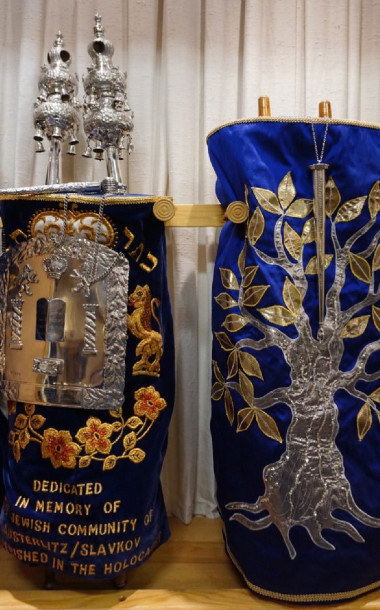
In my studies, I have used poetry and magical realism to tell the stories of real events related to Torah Scrolls, which were rescued during the Holocaust as well as the testimonies of survivors. Post my academic career, I have gone on to develop this work so that it can be used to engage pupils in school with both my own visits to places as well as my writing. I find this to be a really useful tool in helping students respond in creative ways to challenging events in our history while also developing their own creative writing.
Why Poetry?
Poetry is a powerful tool to promote personal interpretations and connections while provoking and enhancing critical thinking skills. I want to bring the history to life and part of that is allowing students to find common connections and experiences between contemporary life and experiences with those of the victims impacted. I use my poetry to inspire critical interpretations of iconic and often seen photos of Auschwitz, which allows pupils to see these events through a different lens and perspective.
Why Magical Realism?
Magical realism fiction has been described by Angel Flores as the point where two different realities intersect, collide and maybe even merge. In my work, I utilise different oppositions that lend themselves to intersection such as life and death in a concentration camp, child and adult relationships and perspectives on camp life and the determination of people to continue with their religious observation under a brutal Nazi regime.
In my story Angel’s Teeth, the angel in the camp is a kind of metaphor for the extreme paradoxes of modern history. One of the most uncivilized, inhumane events of the 20th century is taking place in one of most advanced technologically and culturally advanced countries in Europe.